

If 2025 was the year of the quiet slip dress, 2026 is the year bridal style learned to hold two ideas at once: romance and restraint. This year’s collections move confidently between sculpted minimalism and full, nostalgic drama, giving brides more genuine choice than they have had in seasons. The defining question is no longer which single trend to follow, but which silhouette tells your story in your venue.
Coverage of this season’s runways, including Country & Town House’s round-up of 2026 wedding dress trends, points to the same shift: designers are refining classic shapes rather than reinventing them, and the details — a waistline, a sleeve, a layer that lifts away — are doing the expressive work.
The Return of the Basque and Drop Waist
The most talked-about silhouette of 2026 is the elongated bodice. Basque waists, with their elegant V-shaped point, and softer drop waists lengthen the torso and create a graceful, almost vintage line before the skirt begins. In their modern form they are cleaner than their 1980s ancestors: a sleek corseted top, minimal decoration, and a skirt that can be anything from a slim column to a full ballgown.
This shape particularly suits ballrooms, historic houses, and formal evening ceremonies, where its structure matches the architecture. It flatters brides who want definition without a heavily cinched natural waist, though the fit through the hips must be precise — this is a silhouette where skilled alterations matter as much as the dress itself.
Romantic Lace, Floral Appliqué, and Statement Sleeves
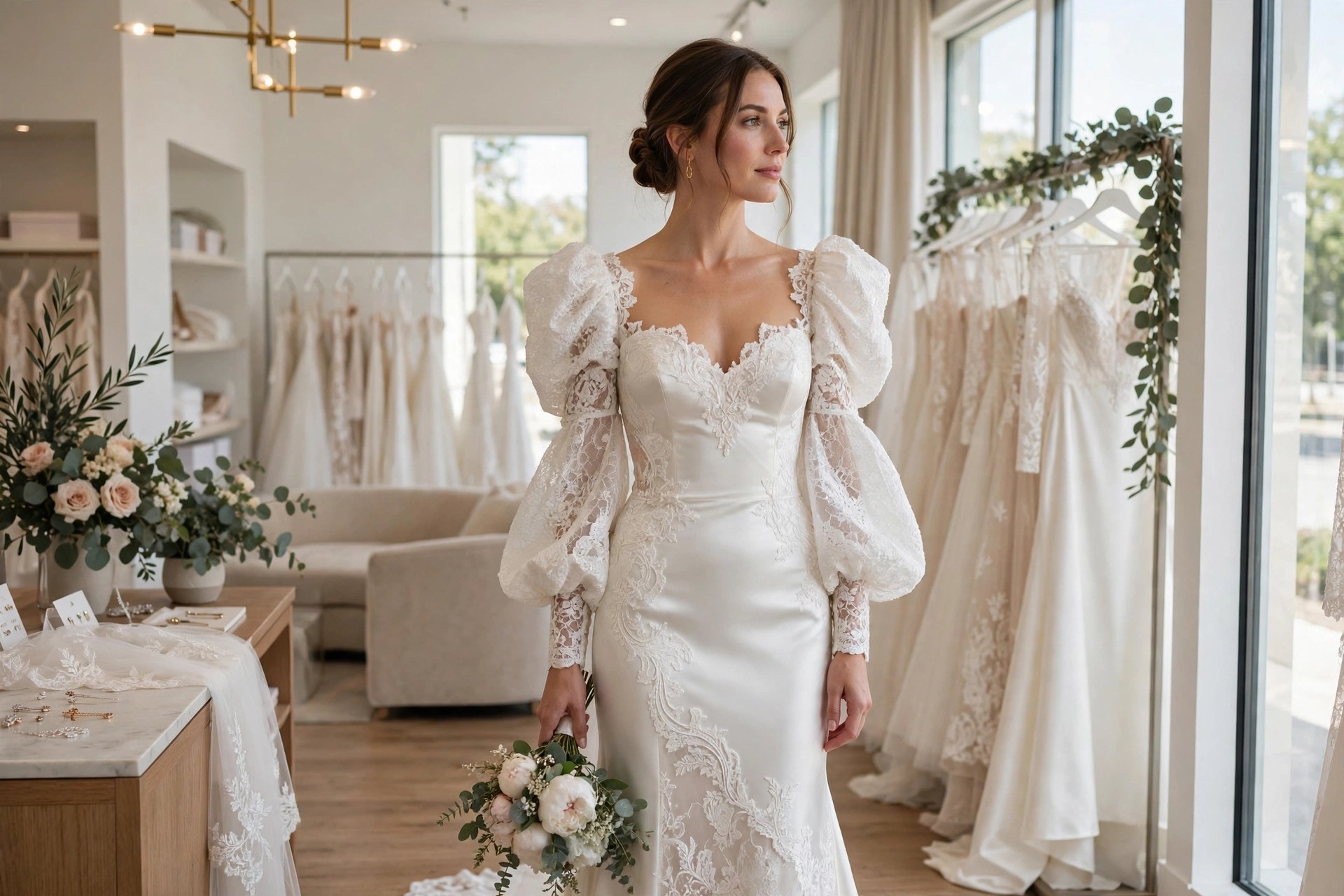
Lace has moved from background to headline. Designers are layering delicate Chantilly, bold floral appliqué, and three-dimensional petals that climb a bodice or scatter down a train, giving gowns texture that photographs beautifully in both daylight and candlelight. The effect is romantic rather than fussy when the base silhouette stays simple.
Sleeves, meanwhile, have become the statement piece. Balloon and bishop sleeves in sheer organza, sculpted leg-of-mutton shapes, flowing cape sleeves, and fully detachable sleeves all appear this year. Detachable options are especially practical: ceremony coverage and drama for photographs, then bare arms and freedom to dance at the reception. If your dress is otherwise minimal, one strong sleeve can carry the entire look, so keep jewellery edited and let the shape speak.
Minimalist Satin Columns and Convertible Overskirts
At the other end of the spectrum, the minimalist satin column remains essential. Bias-cut slips, clean square or bateau necklines, and unadorned crepe and satin rely entirely on cut and fabric quality — there is nowhere to hide, and that confidence is the appeal. These gowns suit city venues, modern galleries, registry offices, and intimate restaurant receptions, and they travel well for destination weddings.
Sitting between the two worlds is the convertible dress. A detachable overskirt transforms a slim gown into a ceremonial ballgown for the aisle and photographs, then lifts away for the evening. It is the smartest answer for brides torn between drama and ease, and it pairs naturally with the growing love of a shorter second-look dress — a playful mini or tea-length style changed into for dancing, cake, and the late-night celebration. For more styling direction, see our feature on modern wedding themes and decor trends to match your look to your setting.
Choosing for Your Venue and Body, and Booking in Time
Start with the venue, not the photograph. A cathedral train belongs in a long aisle, a column dress shines in a contemporary space, and a light, layered gown with movement suits gardens and coastlines where wind and grass are part of the day. Then dress the body you have with affection: basque waists elongate, A-lines skim kindly over hips, columns celebrate clean lines, and sleeves balance proportions beautifully. Try at least one silhouette you did not expect — brides are surprised more often than boutiques can count.
Finally, respect the timeline. Order your dress nine to twelve months ahead where possible, book fittings well in advance, and expect two to three alteration appointments in the final two months, with your last fitting close enough that the fit is true but early enough to fix anything. Bring your actual shoes and undergarments to every fitting. The 2026 bride is not chasing a trend for its own sake; she is choosing a silhouette with intention, giving it time to be made hers, and wearing it like herself — only more so.
